


For the last several years, most enterprises have treated metadata management as a documentation exercise: catalog the tables, tag the columns, publish a business glossary, and call it governed. That approach wasn't the best even when humans were the primary consumers of data. Now that AI agents are overseeing the data, it's a problematic strategy to rely on.
By 2027, Gartner projects that half of all business decisions will be augmented or automated by AI agents, and those agents are already becoming primary consumers of enterprise data alongside human analysts. Agents don't read a wiki page or ask a data steward what a field means. They need semantic clarity delivered in milliseconds, and if the metadata describing that data is stale, incomplete, or sitting in a catalog nobody has updated since Q1, the agent doesn't pause to ask. It reasons with whatever it can access, wrong or not.
That is the core problem with passive metadata in an agentic AI era. And it's why "active metadata" has moved from a niche Gartner concept to a board-level infrastructure requirement.
Passive metadata is metadata that sits in a catalog and waits to be looked up: schema documentation, business glossary entries, lineage diagrams, all maintained by hand and updated on someone's schedule. Active metadata, by Gartner's definition, is continuously analyzed and used to trigger automated action, generating alerts, recommendations, and even AI-assisted reconfiguration of the data and systems around it. Instead of being a reference sitting in a catalog, active metadata behaves like a nervous system, sensing changes and pushing corrections back into the environment in real time.
The difference plays out in practice. A data engineer modifies a model at 9:00 a.m.; under an active approach, the change is detected, propagated to affected assets, and flagged for review within minutes, without a human in the loop. Under a passive approach, that same change might sit unreflected in downstream dashboards and glossary entries for days or weeks.
Why This Matters More in 2026 Than It Did in 2024
Three forces are converging to make this a CIO/CDO-level issue rather than a data team backlog item:
First: Scale
Gartner also projected that in 2026, 30% of organizations would adopt active metadata practices, cutting the time to deliver new data assets by as much as 70%. That is a meaningful competitive gap between organizations that activate their metadata and those that don't.
Second: Market Maturity
The enterprise metadata management market is projected to reach $12.89 billion in 2026, reflecting how quickly vendors and enterprises alike are moving past the "catalog as documentation" model. Gartner's own Magic Quadrant guidance for 2026 describes governance platforms shifting from passive documentation tools to active control planes, with bidirectional tag sync, embedded collaboration, and automated policy enforcement operating in real time.
Third: AI Agents Aren't Humans
AI agents don't tolerate stale context the way humans do. A human analyst who finds an outdated glossary entry will likely ask a colleague or shrug and move on. An AI agent grounded in outdated or missing metadata will act anyway, and the resulting hallucination or bad decision doesn't announce itself. It just looks like output.
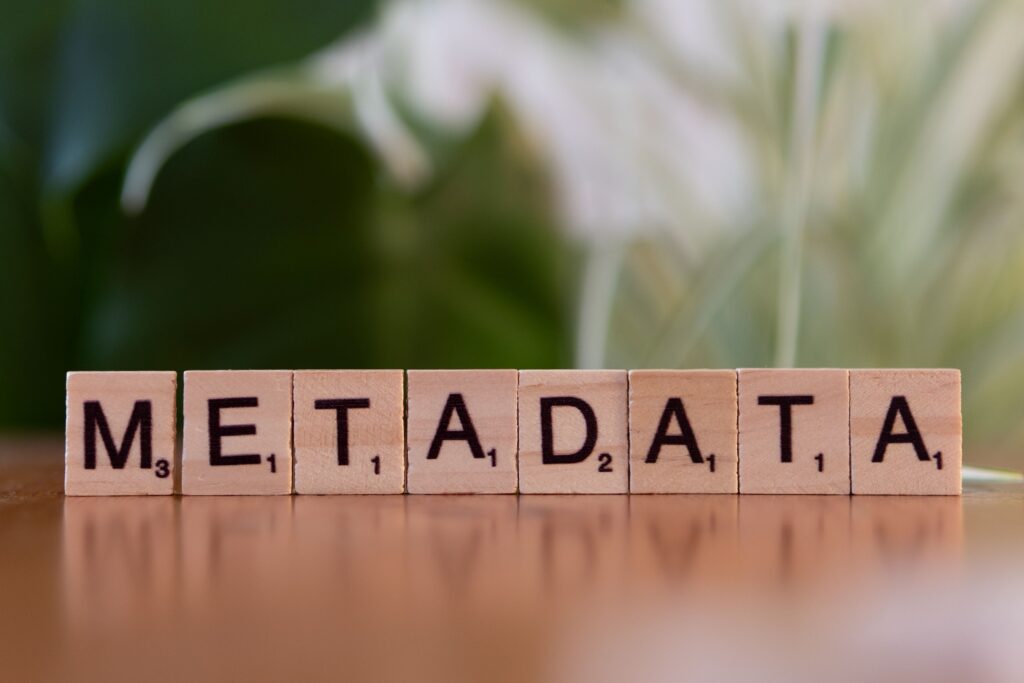
Static metadata isn't enough. It needs to be active to produce reliable agentic AI outputs.
What This Means for CIOs and CDOs
Active metadata isn't a tooling decision you can delegate entirely to a data engineering team. It's a governance decision about how much autonomy your organization is willing to hand to systems that will only be as trustworthy as the metadata feeding them. Three questions worth putting in front of your leadership team this quarter:
- Where in our environment are AI agents (or soon will be) consuming data directly, without a human checkpoint?
- Is our metadata infrastructure built to detect and propagate change in real time, or does it still depend on someone remembering to update a glossary?
- Do we have governance ownership assigned to metadata activation specifically, separate from general data catalog maintenance?
This is precisely the territory First San Francisco Partners (FSFP)'s Semantic Intelligence framework was built for: moving organizations from static glossaries and taxonomies toward a living, governed semantic layer that AI can actually reason with. Passive catalogs weren't sufficient when people were the ones reading them. In an agentic AI environment, they're an even greater liability waiting to surface in front of a customer, a regulator, or a board.