


Every enterprise racing to deploy AI agents is discovering the same uncomfortable truth: the model was never the hard part. The hard part is making sure the AI knows what "active customer," "at-risk account," or "net revenue" means. Not occasionally, but consistently, every time, across every tool that touches it.
That's the job of the semantic layer, and in 2026 it has stopped being a nice-to-have for BI teams and become foundational AI infrastructure
The Need: AI Can't Be Accurate Without Shared Meaning
The signal from across the industry is unambiguous. At the 2026 Semantic Layer Summit, speakers from Snowflake, Databricks, ServiceNow, and Anthropic converged on the same point: AI systems need 100% accurate answers, governed access, and reusable business logic that reflects how the business truly works (without burning millions of dollars letting AI "guess" at the right answer). The organizers put it bluntly (and we agree with them, as we recently wrote about in our blog): passive metadata alone is no longer enough. The market is shifting from systems that describe data to semantic infrastructure that governs, computes, and delivers business context wherever decisions get made.
This isn't theoretical risk. Cube's 2026 field research found that AI agents are now first-class consumers of the semantic layer, and they need governed metrics rather than raw tables to answer consistently. The same governed model has to serve internal BI, embedded analytics, and AI agents at once, or definitions start forking the moment a second consumer shows up. Omni's analysts frame the stakes even more directly: without a semantic layer, a company doesn't have one shared definition of revenue, churn, active users, or pipeline. It has five different ones hiding in dashboards, notebooks, and now AI answers. And the AI accelerant is real: BI sprawl already made metric drift expensive; AI just makes that drift spread faster.
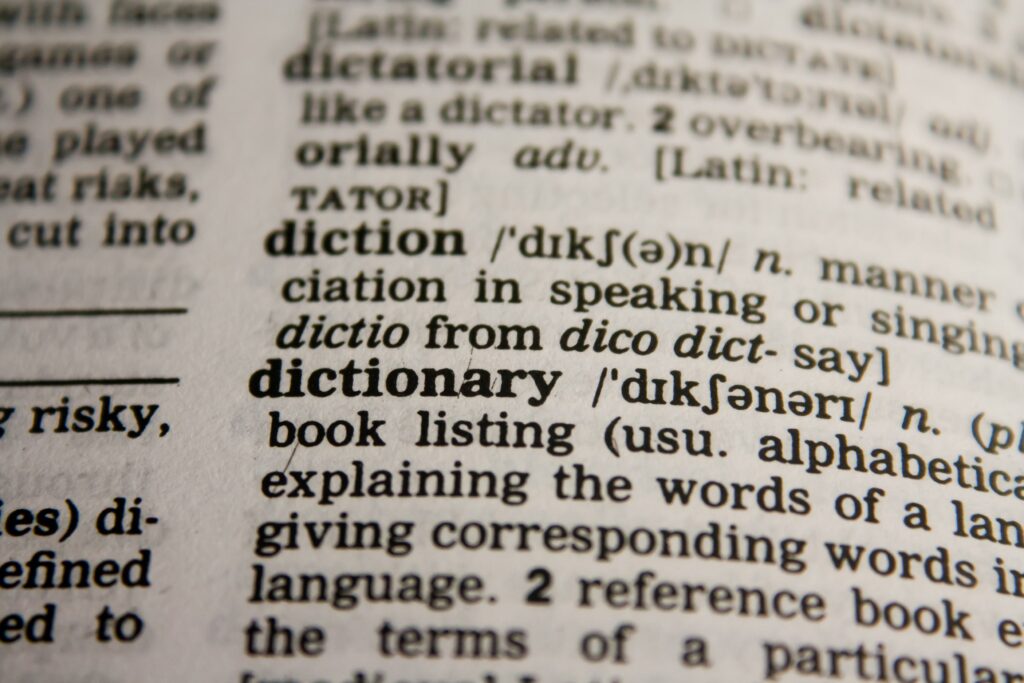
By adding accurate definitions to the semantic layer, your AI outputs become more reliable.
Gartner's research, cited by Atlan, backs this with numbers that should get any CAIO's attention. Analyst Andres Garcia-Rodeja recently predicted that 60% of agentic analytics projects relying solely on the Model Context Protocol will fail due to the absence of a consistent semantic layer. Teams that instead ground their agents in richer semantic and business context see materially better accuracy: the model finally reasons over meaning instead of guessing at it from raw fields. That's why Gartner has gone as far as to say that by 2030, universal semantic layers will be treated as critical infrastructure alongside data platforms and security, a non-negotiable for data and analytics leaders supporting AI.
The market is voting with its investment dollars, too. Futurum Group's latest sizing data shows the semantic layer doubling its growth rate from 16.0% in 2026 to 30.0% by 2031, on track to become the fastest-growing sub-segment in the entire Data Intelligence stack, ultimately surpassing even AI observability as the primary control plane for the AI-driven enterprise.
The Roadmap: From Documentation to Living Infrastructure
So what does it take to get there? Industry practitioners point to a few consistent milestones.
- Stop treating the semantic layer as documentation. Omni's research is blunt on this point: most semantic layer projects fail for a simple reason: teams treat the semantic layer like documentation rather than living, enforced infrastructure that every tool and agent must query through.
- Make it tool-agnostic and portable. Enterprise teams evaluating semantic layers for AI in 2026 are converging on three requirements: the layer has to be tool-agnostic, it has to enforce governance automatically across every connected tool and AI agent, and it has to be portable across clouds.
- Automate the modeling, don't hand-build it forever. The technical bar is rising fast. As Promethium's 2026 comparison notes, Snowflake's early-2026 Semantic View Autopilot moved the category from complex manual modeling to AI-powered automated generation — a sign that manual, spreadsheet-driven definitions won't scale to agentic workloads.
- Measure the payoff. Organizations that get this right are seeing it in the numbers. Magemetrics reports that recent deployments show teams reducing query errors by 40 to 70 percent when a semantic layer standardizes meaning across sources.
- Treat it as a governance program, not a tooling purchase. Every source above agrees on the underlying shift: the semantic layer is graduating from a technical architecture topic to a strategic boardroom requirement. That means executive ownership, cross-functional stewardship, and a roadmap, not a procurement decision made in isolation by IT.
How FSFP Can Help
This is exactly the territory we've spent nearly two decades operating in: the intersection of data governance, semantic modeling, and now AI governance. A tool alone won't fix fractured definitions of "active customer" across your CRM, warehouse, and AI agents. That takes disciplined stewardship: clear data ownership, a decision framework for resolving conflicting definitions, and a rollout sequence that doesn't try to boil the ocean on day one.
Our approach is grounded in Semantic Intelligence and Decision Stewardship, and built around the People, Process, Data, and Technology framework which is designed for exactly this moment. We help organizations move past semantic layers as a documentation exercise and build them as governed, living infrastructure that AI agents can fully trust.
If your AI initiatives are stalling on inconsistent metrics, conflicting definitions, or agents that "hallucinate" business logic instead of reasoning over it, we should talk. The organizations pulling ahead in 2026 aren't the ones with the biggest models — they're the ones with the clearest shared meaning underneath them.